
1 Rock Writing and Sign Language
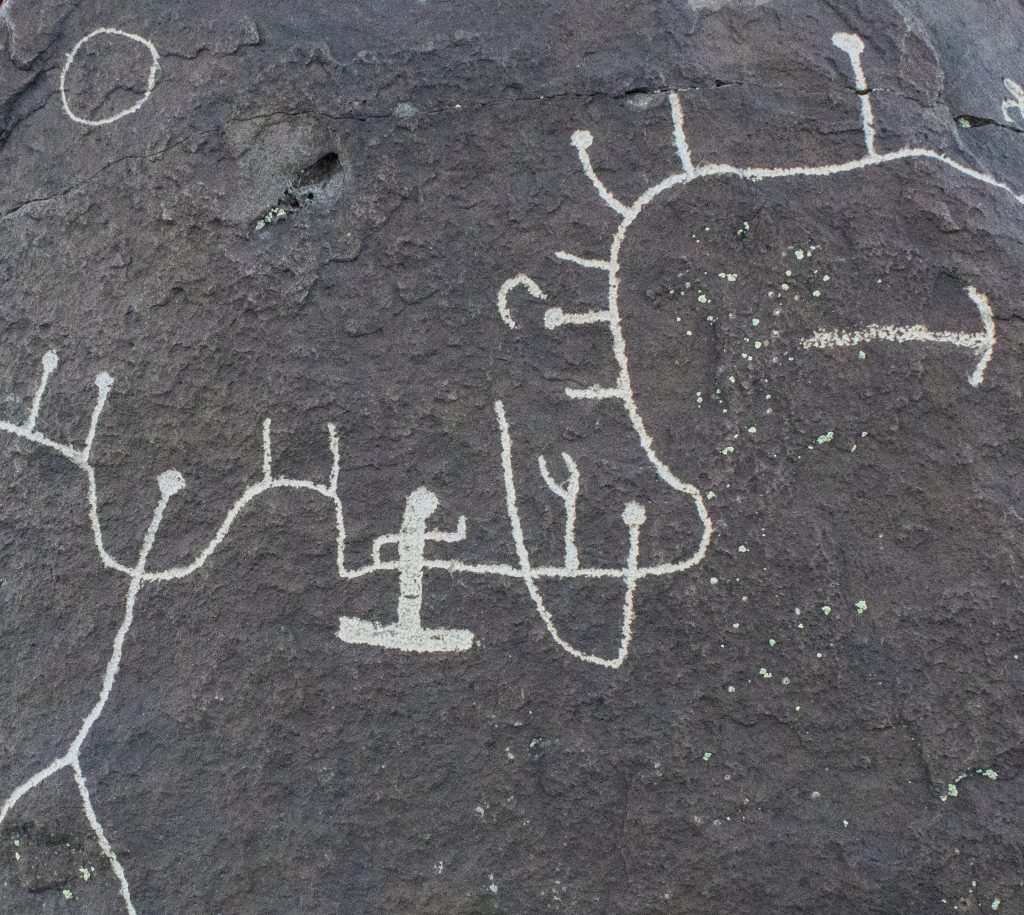
The Southern Paiutes left their own records on stone and called the Petroglyphs, Tumpituhwinap. This translates into “storied rocks.”
These storied rocks are the libraries written on stone and given the power to call in those seeking answers. Many historic accounts were written about the slavery and the coming of the white men.
Southern Paiutes would use a type of sign language when they spoke with other tribes. Sign language is a universal language in the Americas that was taught to the young and old, so communication could be done with all Indian tribes.
Sign language can also be expressed and understood through picture writing on rocks known as petroglyphs or pictographs. This rock writing system was the communication of stories, genealogy, historic events, legends, and maps, handed down for all to see.
People cannot understand a written language if they do not understand the people and their culture. In the Indian worldview it is important to know they do not separate their culture from their religion. Everyday life, whether it be hunting, harvesting, singing and dancing, are preceded and concluded with prayer and ceremonies, so in fact knowing the culture and the sign language, are required to know the signs in the picture writing to understand the Indian.
2 Signs and Culture
The “Art” of picture writing is poorly understood or even acknowledged by non-native societies. I was taught by my tribal elders and many other tribes that the rock writings are directly linked to the Indian sign language. It was a second language that many tribes used and understood but now is not practiced anymore due to the English language domination.
Any picture writing system based on the sign language would have to be similarly Universal. Most people find this writing concept hard to believe because they do not understand the Indian. Some tribes and individuals were experts at writing the signs in shorthand because it was the simplest form to conserve both time and energy from chiseling on the rocks while others chose more elaborate full pictures, such as the tribes in south America.
Some panels were harder to read and was like going from print to cursive due to the different styles of writing. The term ‘doodling’ implies that the writings had no meaning and were created by an Indian who had nothing better to do. It seems ‘ethnocentric’ because non-native people can’t read them, yet, if the sun aligned with the shadows during certain seasons, all of a sudden, it can be read! These petroglyphs are not ‘art’ but our storied rocks on stone, placed there for generations to come.